I was twenty-one when I learned that some people are like weather — you don’t choose to notice them. They simply change the atmosphere, and you find yourself adjusting without quite knowing when it started.
The auditing firm was on the twelfth floor of a glass tower in Makati, the kind of building that made you feel, stepping off the elevator on your first day, that you had arrived somewhere serious. I was fresh out of university, new badge still stiff on its lanyard, trying to look like I belonged among people who carried laptops like weapons and spoke in acronyms, Yahoo was barely new then, Google was not in the picture yet.
There were two women who mattered.
The first was Ms. RY.
She was our supervising partner — in her forties, precise, the sort of woman who made silence feel like a statement. She had the kind of face that had been beautiful for so long it had simply become authoritative. She wore her hair pulled back always, dark suits, small gold earrings that caught the light when she turned her head. She turned her head rarely.
I submitted my work to her. That was the structure of things. I would finish an engagement file, check it three times, check it a fourth time because it was going to Ms. RY, and bring it to her office — a corner room with a view of the Makati skyline that she never seemed to look at, because Ms. RY only looked at what was in front of her.
She was not unkind. But she was contained in a way that made you feel the distance between you was not personal — it was simply the natural order of things, like the distance between a planet and its sun.
I was drawn to her the way you are drawn to something you cannot read. She was a locked room and I kept, quietly and without any plan, trying to find the door.
I never found it.
What I found instead was Ms. AF.
Ms. AF was a head partner. In her fifties maybe, but where Ms. RY was architecture — fixed, precise, load-bearing — Ms. AF was weather. She moved through the office like she owned not just the space but the mood of it, laughing at something before the joke was finished, stopping to ask the receptionist about her daughter’s recital, bringing pasalubong from wherever she’d been the week before and leaving it on the pantry counter with no note, as though gifts were simply a thing that happened.
She was strict about work. Make no mistake about that. She had standards that did not negotiate. But she wore her authority lightly, the way people do when they’ve had it long enough to stop needing to prove it.
She was the one who took me out of the office.
Client visits outside Makati — Laguna, Batangas, once as far as Pampanga — and Ms. AF would ride with me in the company car, folders on her lap, reading glasses on, occasionally looking up at the highway to say something that had nothing to do with work. About the province we were passing through. About a restaurant she’d eaten at years ago somewhere off this road. About what she was like at twenty-one, which she offered in small pieces and always with a laugh at her own expense.
I learned more about auditing in those car rides than I did in any training room. Not the technical parts — the other parts. How to walk into a client’s office and read the room before you open your folder. How to disagree with someone twice your age without making them feel diminished. How to know when a number is wrong not because the math says so but because something in the way it was presented doesn’t sit right.
She taught me to trust my instincts. She said this directly, which felt revolutionary. No one had said this to me before.
“You’re sharp, hija,” she told me once, somewhere on the SLEX, without looking up from her folder. “Don’t let anyone make you doubt that.”
I looked out the window at the flat green fields and felt something settle in my chest that I didn’t have a name for yet.
The rhythm of my days was this: I worked alongside Ms. AF, traveled with Ms. AF, learned from Ms. AF. And I submitted my work to Ms. RY.
It sounds simple. It wasn’t.
There was something about bringing my finished files to Ms. RY’s office — the walk down the corridor, the knock, the moment she looked up from her desk — that I couldn’t metabolize into something ordinary no matter how many times I did it. She would take the folder, open it, review the top pages with that particular quality of attention she gave everything, and then either nod or ask a question, and the question was always precise and always made me realize there was a layer of the problem I hadn’t quite reached.
I told myself it was professional. Admiration for someone excellent at their craft.
I told myself this the way you tell yourself something you need to be true.
Once — only once — she looked up from a file I’d submitted and said, “This is good work.” Not a question. Not qualified. Just the plain fact of it, stated and then released.
I walked back to my desk and sat down and looked at my screen without seeing it for a full minute.
I left after a year.
A bank in my hometown offered me a position and I took it, which was a practical decision, and also a decision made by someone who needed to put some distance between herself and a locked room she kept standing outside of.
I didn’t say a proper goodbye to Ms. RY. I submitted my last file, she received it as she received all the others, and that was that. I told myself this was fine. That it was the appropriate and professional conclusion to an appropriate and professional chapter.
I said goodbye to Ms. AF over coffee in her office. She gave me advice I still use. She hugged me at the door — not the formal kind, the real kind — and said, “Go do well. But don’t lose the instinct. That part isn’t taught.”
I cried in the elevator.
Ten years passed.
Then my phone rang.
“Anak.” Ms. AF’s voice, unmistakable, warm, slightly amused at her own audacity. “I heard you were in Davao. I’m here for a conference. Are you going to show me around or not?”
I laughed before I could stop myself. Ten years, and she said it like we’d seen each other last Tuesday.
I showed her Davao the way you show a place to someone you want to understand you — not the landmarks, but the texture of it. The market in the morning before the heat settled in. The durian stalls she approached with theatrical suspicion and then ate with genuine pleasure. The waterfront at dusk when the city softened and the bay held the last of the light.
We ate dinner at a place I loved, small and unhurried, and she ordered too much food and insisted I take the rest home, and somewhere between the second course and the third I thought: she is exactly the same. The warmth, the sharpness underneath it, the way she listened with her whole face. Ten years had given her a few more lines and had not touched the essential thing at all.
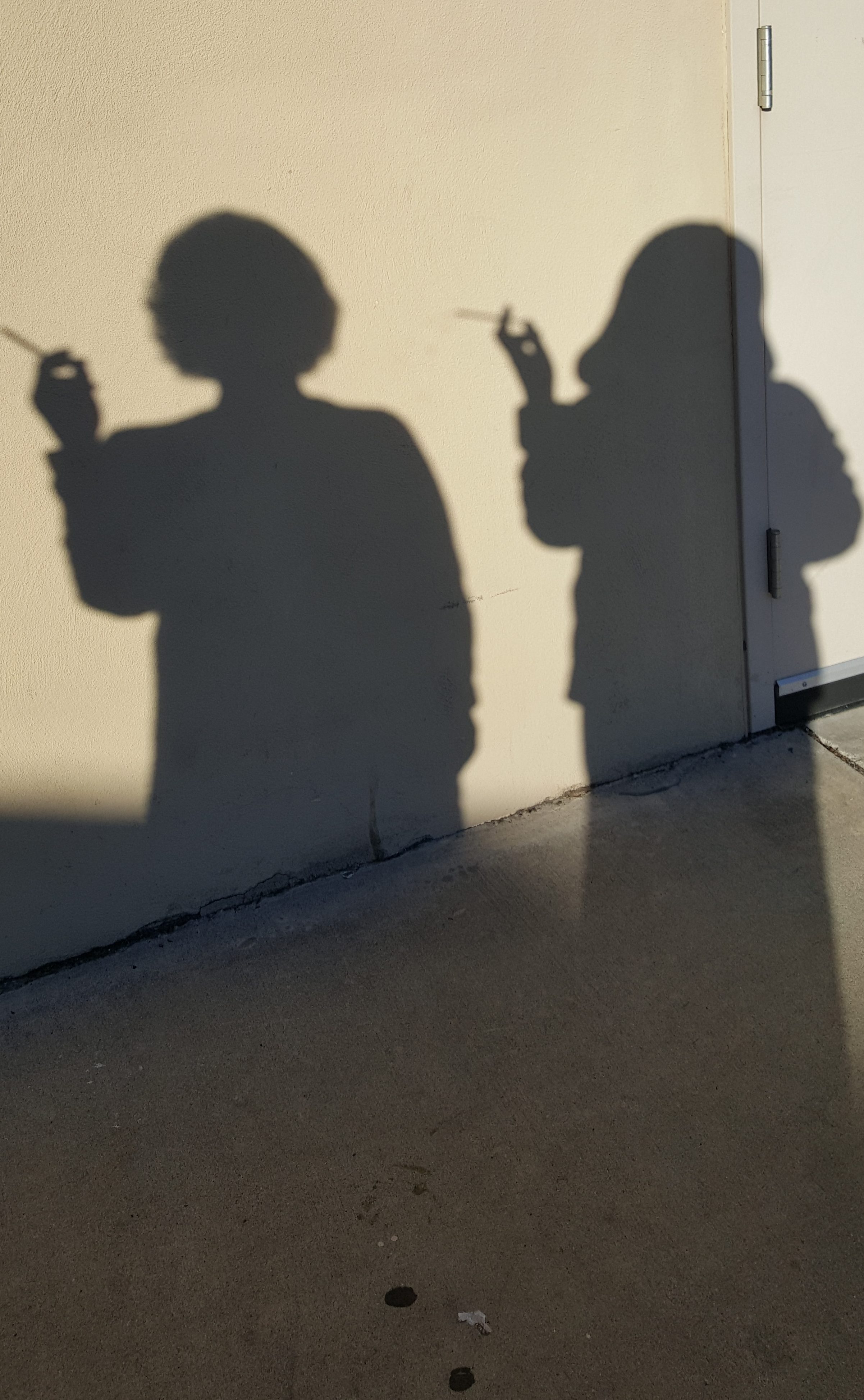
We talked about everything — her firm, my career, the city, the years in between. She asked questions the way she always had, like your answer genuinely mattered and she had all the time there was to hear it.
“You’ve done well,” she said, at some point in the evening.
“You told me to.”
She smiled. “You did the work.”
We stayed until the restaurant grew quiet around us, and when we finally stepped outside the air was warm and smelled of rain that had fallen somewhere nearby. She took my arm walking to the car — naturally, without ceremony — and I thought of all those highway drives, the folders on her lap, the skyway unrolling ahead of us.
I thought: some people stay.
Not in the way of presence — she had been gone from my daily life for a decade. But in the way of formation. The shape of how you think, how you carry yourself, what you refuse to doubt. She had built something in me without making a project of it, and it had simply stayed.
I still think of Ms. RY.
I don’t know what that means, exactly. She was never mine to know, and I was never hers to notice, not really. She was a locked room and I was twenty-one and some doors are not meant to open — they are meant to teach you something about the difference between longing and love.
But sometimes, in the particular quiet of late evening, I think of that corridor. The knock. The moment she looked up.
This is good work.
Four words, stated plainly, already moving on.
I’ve spent thirty years making them true… I heard RY is here, somewhere in the East Coast.
G.
© 2026 Geena D. All rights reserved.

